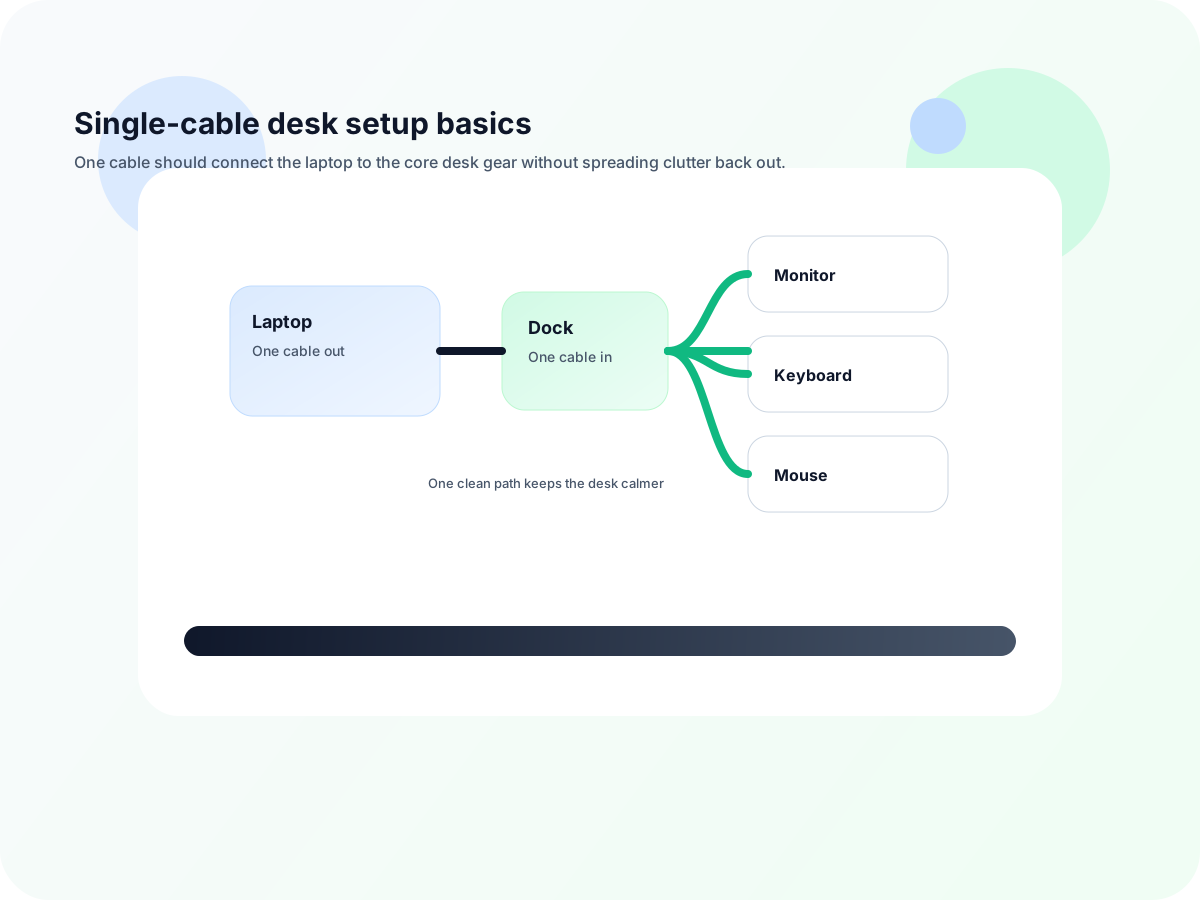
Desk flow guide
USB-C Monitor vs Dock for a Single-Cable Desk Setup
When a single-cable desk setup is the goal, the real choice is often whether the center of the desk should be a USB-C monitor or a USB-C dock. Both can reduce cable clutter, but they solve slightly different problems.
A dock is often the better fit when you already have a good monitor and just need a clean connection point. A USB-C monitor can be the better fit when the display itself should also handle charging and hub duties.
Quick rule
Choose the center of the desk before you buy the rest of the chain
If the monitor should be the main screen and the hub for accessories, a USB-C monitor can simplify the desk. If the monitor is already fine and you only need a clean handoff for charging and peripherals, a dock is usually easier to justify.
This guide helps you decide whether the single-cable setup should be built around the monitor or around a dock. Check your laptop’s USB-C or Thunderbolt support before buying either path.
Buying now
If the desk needs a live path now, start with the setup that clears the biggest bottleneck first
The test on this page is whether readers who already know they want a cleaner desk move fastest when the monitor-first live route appears first. Laptop-first comes next when the laptop is still eating the workspace, and cleanup-first stays as the calmer fallback.
Live now · monitor-first
HUANUO FlowLift
Use this route first if the external monitor should free the most desk depth and make the layout feel less cramped.
Live now · laptop-first
Roost V3
Use this route if the laptop still eats the desk's front edge and needs to move out of the way.
Live now · cleanup-first
YSAGi Leather Desk Protector
Use this route if the setup already works but the surface still feels visually busy.
Best comparison
Best USB-C Monitors for Single-Cable Desk Setups
Best next click if the monitor itself should be the hub and the dock question is basically settled.
When a USB-C monitor wins
| Good fit if… | Why it helps |
|---|
| You want the display to be the central object on the desk | The monitor can take on more of the connection burden. |
| You need a clean one-cable path with minimal extra boxes | Fewer separate devices can make the setup feel simpler. |
| You already planned to replace the monitor anyway | Combining the display and hub jobs can reduce duplicated hardware. |
When a dock wins
| Good fit if… | Why it helps |
|---|
| Your current monitor is already fine | A dock keeps the display in place and still simplifies the cable path. |
| You mostly want charging plus ports | A dock can handle the handoff without forcing a display upgrade. |
| You want a cheaper first step | Buying one connection device is often easier than replacing the whole display. |
Good next reads
If you still need to turn the decision into an actual setup, go here next
Best next read if the remaining question is whether the dock is worth it at all.
Best next read if the workflow itself still needs to be mapped out.
Best next read if the dock path is still the simpler option.
Best next read if the display should own the hub and make the desk cleaner.
Final takeaway
The better choice is the one that clears the real bottleneck, not the one that sounds more complete
A USB-C monitor is best when the display should also be the hub. A dock is best when the display is fine and the setup only needs a cleaner connection point. The right answer is the one that removes the most friction from the desk you actually use.